Volvo Wheel Alignment Services in Lawrenceville, NJ
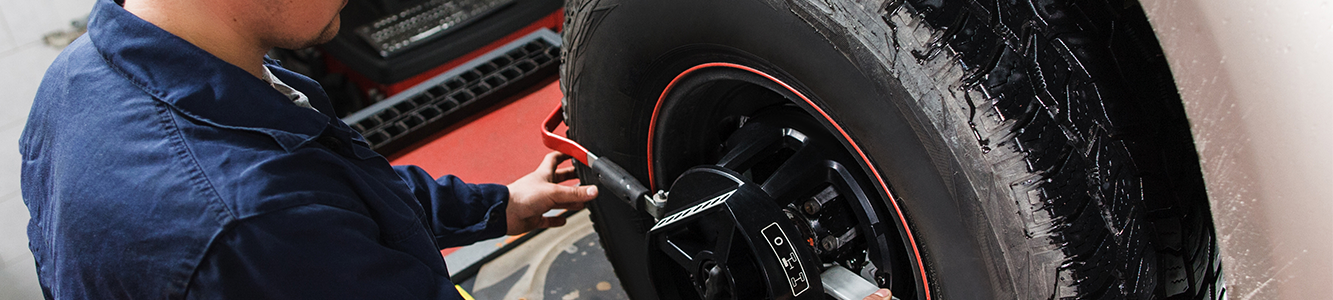
Keep Your Wheel Alignment Ready for Every Drive Ahead
New tires that begin wearing unevenly soon after they go on, steering that feels heavier than it should, or tires that scrub and chirp in slow turns all suggest the wheels are not working together. At Volvo Cars Princeton in Lawrenceville, NJ, our technicians align all makes and models. Before any adjustment is made, the vehicle is checked for worn steering joints, sagging ride height and brakes that drag, since each of those can mimic or undo an alignment. The angles at both axles are then measured against the specification for your vehicle. Your report lists every measured angle so you can see which ones were corrected.
The Role of Your Wheel Alignment in Everyday Driving
An alignment sets how each wheel is aimed relative to the body and to the other wheels. The goal is a tire that rolls straight ahead with its full tread pressed evenly on the road, so the rubber wears across its whole width. When the aim is off even slightly, the tire scrubs sideways as it rolls, and that scrubbing grinds away tread on every drive.
Many vehicles today carry their rear wheels on independent suspension, and on a large share of them those rear wheels can be adjusted. A four-wheel alignment reads and corrects the rear first, because the rear decides the direction the body travels, and the front is set last.
- Ride height affects the angles, since a sagging spring lowers one corner and tips its wheel inward at the top.
- Rear adjustments are made through eccentric bolts or adjustable links on many independent rear suspensions.
- Replacing a tie rod, control arm, strut or subframe mount moves the wheel's position, so an alignment normally follows that work.
- When the steering wheel is turned, the inside front wheel is meant to turn more sharply than the outside one, and a bent steering arm upsets that relationship.
- Power steering assist makes the wheel feel light at parking speeds, and a fault in the assist can feel much like a stiff front end.
New tires are where alignment pays off most directly. A fresh set starts with deep, even tread, and the first stretch of driving is when a misaligned wheel does its fastest damage, wearing a pattern into the tread that the tire then carries for the rest of its life. Measuring the angles when the set goes on gives those tires an even start.
Heavy steering is often written off as something that simply comes with an older car. A wheel that takes extra effort to turn usually has a specific cause: a front tire running low, a dry ball joint or strut bearing, too much caster from a shifted part, or a problem in the power steering assist. Each one has its own fix, and an alignment by itself corrects only the angles.
Sounds, Smells and Sensations Linked to the Wheel Alignment
Replacement parts are a common reason angles change. Every time a new tie rod end, control arm, strut or steering rack goes in, the wheel sits in a slightly different place than before, and a vehicle that drove straight on its old parts may not on the new ones. Lifting or lowering kits shift the angles even more.
Heavy steering and slow-turn squeal have causes of their own. A ball joint or strut bearing that has lost its grease binds as the wheel turns, a bent steering arm makes the front tires fight each other in tight turns, and too much caster adds effort at every speed. Low pressure in the front tires makes all of these feel worse.
- New tires that show wear on one shoulder or a saw-tooth edge across the tread blocks soon after installation.
- Steering that takes more effort than it used to, especially when parking or pulling out of a tight space.
- A scrubbing chirp from the front tires when making a tight U-turn or easing up a spiral ramp.
- A vehicle that sits lower at one corner, or looks nose-down or tail-down compared with when it was new.
- A change in how the vehicle drives right after a suspension or steering part was replaced.
Some steering weight is there by design. Many vehicles firm up the steering at highway speed or in a sport drive mode, and wide performance tires take more effort to turn at a crawl. The technician compares the effort you describe against how your vehicle is meant to feel before treating it as a fault.
An alignment booked the day new tires go on saves the most tread, because nothing has worn yet. The same is true after suspension or steering repairs: a measurement soon after the work catches any shift before it shows up on the tires. Heavy steering is worth checking promptly too, since a binding joint keeps wearing as you drive.
How Volvo Cars Princeton Cares for Your Wheel Alignment
Alignment work here starts from one of three situations, a fresh set of tires, heavy steering or a suspension repair that just happened.
New Tire Alignment Setup
When a new set goes on, the technician measures both axles before the tires have a chance to wear in a bad pattern. Rear angles are adjusted first where your vehicle allows, and the front is then set to match. Ride height and tire pressures are checked beforehand, since either one can throw off the readings. You receive a record of the final settings to keep with the paperwork for the new tires.
Heavy Steering and Turn Squeal Diagnosis
Steering that feels stiff or tires that chirp in slow turns are traced before anything is adjusted. Ball joints and upper strut bearings are checked for binding, the steering arms are inspected for bends, and the turning angles are measured to see whether the inner wheel tracks properly through a turn. The power steering assist is checked for stored faults as well. Your advisor explains which part is responsible and whether an alignment is part of the fix.
Post-Repair Suspension Alignment
After struts, control arms, tie rods or a steering rack are replaced, the wheel angles are measured and reset to specification. The technician confirms the new parts are tightened at normal ride height so the bushings are not twisted. Rear angles are included, since a rear repair can change how the whole vehicle tracks. Your report shows the readings so you know the repair finished in the right place.
How Each Wheel Alignment Service Visit Unfolds
An alignment visit begins with your description of what changed and when, such as new tires, a recent repair or steering that has grown heavy. The technician checks tire pressures, ride height and the steering joints before the vehicle goes on the rack.
Picture a driver heading north on Route 206 toward Princeton whose car keeps easing right, and who books a wheel alignment to cure it. On the rack every reading sits in range. Back from the road test, the right front hub is clearly warmer than the left, and the caliper on that side has a sticking slide pin that holds the pad lightly against the rotor, so freeing the caliper is what stops the pull.
- Tire pressures are set and ride height is measured at each corner, since both change the angles the rack reads.
- Ball joints, tie rod ends and strut bearings are checked for play and binding, because a worn part will not hold a new setting.
- When a pull is the complaint, each wheel is checked for heat after the test drive to catch a brake that is not releasing.
- Your advisor reviews the measurements and estimate with you, and adjustments wait for your approval.
With the angles set, the steering wheel is checked for center and the steering sensor is reset where the vehicle calls for it. A final drive confirms that the effort feels normal and the vehicle tracks straight.
We align sedans, SUVs and light trucks across all makes and models. Plenty of alignments wrap up that afternoon, when the schedule and parts allow, though a bent part that has to be ordered stretches the visit, and your advisor flags that early.
How Volvo Cars Princeton Handles Wheel Alignment Service Near Lawrenceville
Factory-trained technicians at Volvo Cars Princeton follow Volvo's published alignment specifications for each model, whether an S60, an XC60, an XC90 or a smaller XC40, an S90 sedan, or a V90 Cross Country, a V60 Cross Country or the standard V60. Cross Country models and vehicles with air suspension ride at different heights than their standard counterparts, so the targets for your vehicle are confirmed against your VIN. After an alignment, Volvo diagnostic software is used to calibrate the steering angle sensor and to check the power steering system for stored faults.
On models with air suspension, the ride height is set the way Volvo's procedure describes before the angles are read. Your advisor can explain whether your model has that step.
- Genuine Volvo tie rods, control arms and alignment hardware are available when a bent or worn part has to be replaced.
- Final settings are stored on your service history, giving the next set of tires a reference point.
- When the angles are already correct, the report says so and nothing is adjusted.
Find Volvo Cars Princeton in Lawrenceville, NJ
Drivers Beyond Lawrenceville Welcome Too
Route 206 north from Lawrenceville runs through the village and on toward Princeton, a mix of steady cruising and slow turns at intersections that brings out both a pull and heavy steering. If either shows up, or a new set of tires just went on, Volvo Cars Princeton can put the vehicle on the rack and read every angle.
- Pennington, NJ
- Hopewell, NJ
- Princeton, NJ
- Ewing, NJ
- Titusville, NJ
- Trenton, NJ
- Hamilton, NJ
- Plainsboro, NJ
New tires or a recent suspension repair are a good reason to have the angles measured.
Helpful Answers on Alignment Care
New tires, heavy steering and recent repairs prompt most of the alignment questions our advisors hear.
Q: Will skipping an alignment shorten the life of my new tires?
Q: Why does my steering feel heavy at low speeds?
Q: Why do my tires squeal in slow turns?
Q: Do I need an alignment after suspension or steering repairs?
Q: Can you align a vehicle from a brand you do not carry?
If the steering has grown heavy or you are buying tires, phone the service desk and say so, and an advisor can line up the measurement with your tire appointment.
Bringing the paperwork from a recent suspension repair helps the technician see what was replaced.
Set Up Your Alignment Visit With Volvo Cars Princeton
Tread lost to a bad angle never comes back, and a fresh set of tires is the easiest thing to protect. Measuring the angles when the tires go on, or right after a steering or suspension repair, keeps that tread working evenly from the start.
If a worn part or a dragging brake turns up, your advisor lists it separately with its own price. You choose what to approve, and no adjustment happens without your agreement.
Pair your next tire purchase with an alignment at Volvo Cars Princeton. Request a time for both, and the team can arrange the work in one visit.
Service Specials

With Multi-Point Inspection
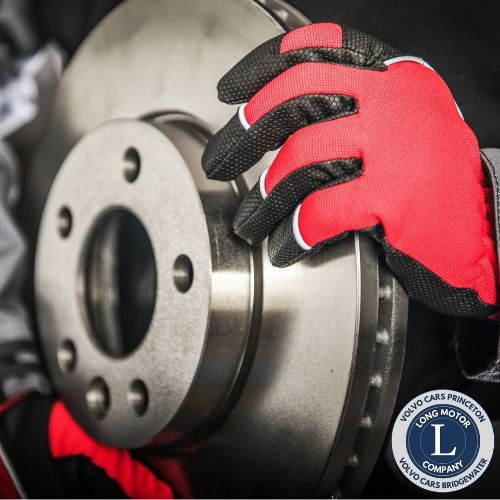
Replace front or rear pads,Inspect discs, calipers, lines, hoses, cylinders, and master cylinder