Volvo Transmission Repair Services in Lawrenceville, NJ
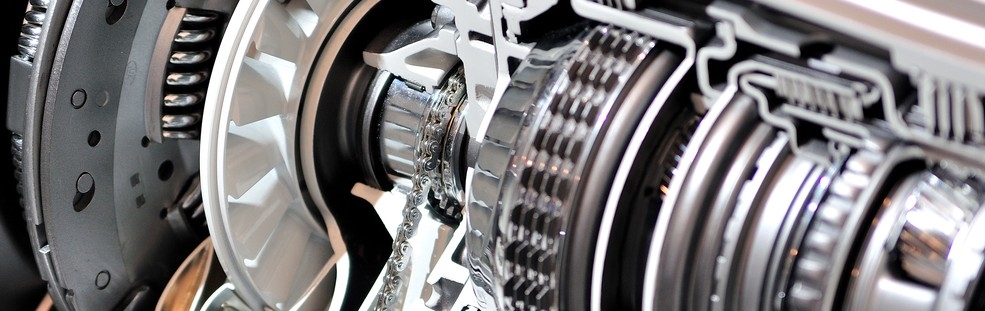
Your Next Trip Depends on Your Transmission
A transmission that slams between the lower gears while crawling through traffic, or hunts for a gear on gentle throttle, is often telling you something about how it has learned to shift, not that it is about to fail. The team at Volvo Cars Princeton in Lawrenceville, NJ repairs transmissions and drivetrains on all makes and models, whether a compact sedan or a large all-wheel-drive SUV. Each visit starts with a diagnosis: a road test that reproduces the complaint, a scan of stored data and a look at the parts around the transmission that can imitate its faults. Only once the cause is pinned down does any repair get proposed. You see the findings first and approve every step.
What Drivers Should Know About the Transmission
A modern automatic does not shift by a fixed recipe. Its control module times each gear change by deciding how quickly to apply one clutch while releasing another, and it weighs throttle position, road speed, engine load and fluid temperature to make that handoff feel smooth.
Most current automatics also adapt. As clutches wear and fluid ages, the module notices when a shift took slightly too long or happened too abruptly and adjusts the pressure it commands on the next one. Those stored corrections, often called adaptive values or shift learning, explain why a transmission can feel subtly different after its memory is cleared, after a repair or when a new driver's habits take over.
- Clutch-to-clutch shifts depend on precise overlap, so a little too much feels like a bump and too little lets the engine briefly race between gears.
- Fluid temperature changes how quickly hydraulic pressure builds, so many units hold gears longer and shift more firmly until the fluid is warm.
- On many newer vehicles the gear selector sends park, reverse, neutral or drive as an electronic signal, with no mechanical cable running to the transmission.
- All-wheel-drive models often use a coupling near the rear axle that decides how much engine torque reaches the rear wheels, controlled separately from the gearbox.
- That coupling commonly has its own small fluid supply and, on some designs, a filter or pump that needs service of its own.
Because adaptive values are learned from driving, they can drift in an unhelpful direction. A vehicle that spends most of its life in short, stop-and-go hops may learn shift pressures that feel abrupt at low speed, while one driven gently on open highways may feel soft when pushed. A technician can view those stored values with a scan tool and, where the procedure allows, reset them and guide the module through a fresh learning drive.
Harsh shifts are widely read as proof that a transmission is wearing out. Often the hardware is fine, and the firmness comes from adaptive values that settled in the wrong place, fluid that has lost its friction qualities or a sensor feeding the module a bad reading. Treating that as a failed transmission can lead to a costly replacement that a reset, a fluid service or one sensor would have avoided.
What Wears Down Your Transmission Over Time
Stop-and-go traffic is where shift quality complaints surface first. The transmission is constantly stepping down as the car slows and back up as it pulls away, so a small timing error repeats again and again on a single commute. Drivers usually describe it as a clunk while coasting toward a stop or a jolt when accelerating just before the car comes to rest.
The gear selector and the all-wheel-drive coupling produce their own distinct complaints. A selector fault may refuse to leave park, show a gear on the display that does not match what you chose or drop the car into neutral with a warning. A coupling that is low on fluid or has a weak pump can let the front tires spin on a wet launch, or bind in tight turns.
- A firm bump on downshifts while coasting toward a light, most noticeable once the vehicle is fully warmed up.
- A delay and then a thump when you press the accelerator again just before reaching a complete stop.
- A message asking you to select park, or a shifter that will not move out of park even with the brake pedal pressed.
- Front tires that chirp or spin on wet pavement from a stop, which can point to a rear coupling that is not engaging.
- A hopping or binding feel in slow, tight turns, as if the brakes were lightly applied.
Some of these signs have causes outside the transmission. A failed brake light switch can keep the selector locked in park, and tires with uneven tread depth on one axle can make an all-wheel-drive system fight itself in parking lot turns. Checking those simpler items first keeps the diagnosis honest and the estimate small.
Booking early matters because a transmission that shifts harshly keeps loading its clutches with every gear change, and a coupling run low on fluid can overheat its own clutch pack. A visit at the first sign often ends with a reset, a fluid service or a single sensor. A selector warning left alone long enough can strand the car in park far from home.
Service Options for Your Transmission
Three transmission services cover most complaints: a shift quality evaluation, coupling fluid service and a gear selector diagnosis.
Shift Quality and Adaptive Learning Evaluation
The technician drives the vehicle through the conditions you describe, paying special attention to low-speed downshifts and the moment the car pulls away again. Stored adaptive values and fault codes are read with a scan tool and compared with what a healthy unit typically shows. Fluid level and condition are checked using the method the maker specifies. If a reset and a guided learning drive are appropriate, your advisor explains that option before any parts are discussed.
All-Wheel-Drive Coupling Fluid Service
Many all-wheel-drive systems use a separate coupling at the rear with its own fluid, and that fluid is easy to overlook during routine maintenance. The technician drains the old fluid, inspects it for clutch wear material and refills with the type specified for that coupling. Where the design includes a filter or a pump, those parts are checked as well. A road test afterward confirms the rear wheels pick up torque smoothly from a stop.
Gear Selector and Park Lock Diagnosis
When the shifter will not leave park, the display shows the wrong gear or a selector warning appears, the technician tests the selector, its wiring and the signals it sends. The brake light switch and the park lock mechanism are checked, since either one can block a shift. On cable-operated designs the linkage is inspected for stretch and adjustment. You learn which part is at fault and what the repair involves before approving it.
From Check-In to Road Test on Every Transmission Repair Job
The appointment begins with when and where the complaint happens. Your advisor asks whether the harsh shift shows up in the stop-and-go stretches of Brunswick Pike, at a steady cruise on I-295 or only in tight turns into a parking space, since each answer points the road test in a different direction.
Picture a driver who feels a rhythmic shudder through the floor once the car settles into highway speed on I-295 and assumes the transmission is slipping. The shift data and fluid look normal, and the shudder does not change when the transmission changes gears. The cause is a worn driveshaft center support bearing whose rubber mount has cracked, letting the shaft wobble at speed. Replacing that bearing removes the vibration, and the transmission never needed to be opened.
- The test drive starts from a cold engine and continues after warm-up, with low-speed downshifts, rolling pull-aways and a steady highway stretch.
- Adaptive values, fault codes and live clutch and temperature data are read and saved before anything is reset.
- Driveline parts that can mimic transmission faults, including the driveshaft, its support bearing and the axle joints, are inspected on the lift.
- Findings arrive with an estimate for each step, and no repair starts without your approval.
Once the repair is finished, the technician repeats the same drive that revealed the complaint, under the same conditions. If adaptive values were reset, the vehicle goes through the learning routine the procedure calls for, and the stored values are checked again so you leave with a transmission that has already begun relearning.
All makes and models are welcome, from front-wheel-drive sedans to all-wheel-drive SUVs and trucks. When the schedule and parts allow, evaluations, coupling fluid services and many selector repairs are finished the same day, and internal repairs get a timeline once the cause is confirmed.
Transmission Service From Volvo Cars Princeton Near Lawrenceville
The automatic transmissions and all-wheel-drive systems in the XC40, XC60 and XC90, the S60 and S90 sedans and the V60, V60 Cross Country and V90 Cross Country wagons are familiar ground for the factory-trained technicians at Volvo Cars Princeton. With Volvo diagnostic software, the team reads the transmission's adaptive data and checks whether a transmission control software update has been released for your vehicle. Fluid type and the coupling service procedure are confirmed against your VIN.
Software updates are among the first things checked on a Volvo with a shift quality complaint, because a revised calibration can change how the transmission times its shifts. When an update applies, it is installed and followed by the learning drive the procedure calls for.
- All-wheel-drive versions of models such as the XC60, XC90 and V90 Cross Country use a rear coupling, and your advisor can tell you whether its fluid service is due.
- Fluids that meet Volvo's specification are used for both the transmission and the rear coupling.
- Gear selector warnings on newer Volvo models are traced through the vehicle's own fault history, which shows when the selector signal dropped out.
Find Volvo Cars Princeton in Lawrenceville, NJ
Neighbors in and Around Lawrenceville
Brunswick Pike asks a transmission for constant low-speed shifting between lights, while I-295 around Lawrence and Hamilton is where a driveline vibration at cruising speed tends to reveal itself. Drivers from Trenton to East Windsor bring sedans, wagons and SUVs of every make to Volvo Cars Princeton when either kind of driving starts to feel wrong.
- Trenton, NJ
- Ewing, NJ
- Hamilton, NJ
- Mercerville, NJ
- Robbinsville, NJ
- Hightstown, NJ
- East Windsor, NJ
- Princeton, NJ
Note when the harsh shift happens and bring that detail to your first visit.
Before You Book: Transmission Repair Questions
Here are answers to the shift, selector and all-wheel-drive questions drivers raise most.
Q: What is adaptive shift learning?
Q: Why does my car shift hard only in slow traffic?
Q: Does an all-wheel-drive coupling need its own fluid service?
Q: Why won't my shifter come out of park?
Q: Do you repair transmissions on other brands?
Describe for the service desk when the harsh shift, selector warning or vibration shows up, and an advisor can set up the right evaluation.
Details about speed, temperature and traffic help the most.
Reserve Your Transmission Repair Appointment
Every harsh shift adds a little more stress to the clutches inside the transmission and the mounts around it. Having it evaluated while the cause is still a learned value, a fluid or a sensor keeps the fix simple.
Your advisor explains the findings and the estimate for each step, and you decide what moves forward. Nothing is replaced until you approve it.
Choose a time that fits your schedule, and the Volvo Cars Princeton team will plan the road test around the conditions you describe. Bringing notes about when the problem appears makes the visit more productive.
Service Specials
Replace front or rear pads,Inspect discs, calipers, lines, hoses, cylinders, and master cylinder
With Multi-Point Inspection