Volvo AC Repair in Lawrenceville, NJ
Warm Air From the Vents Usually Means a Leak, and Leaks Only Get Bigger
A New Jersey summer can turn a car with a weak air conditioner into a rolling greenhouse, and the problem rarely fixes itself. The service team at Volvo Cars Princeton in Lawrenceville handles air conditioning repair for every Volvo on the road, and we work on all makes and models too. Before any refrigerant goes in or any part comes out, a technician measures system pressures, checks for leaks, and confirms exactly why the cabin isn't cooling. That diagnosis-first approach keeps you from paying for a recharge that leaks out again a few weeks later. Bring it in at the first sign of trouble and we'll show you what we find.
What Actually Happens Inside Your Volvo's Air Conditioning
Your air conditioner doesn't create cold. It moves heat out of the cabin and releases it outside, using refrigerant that changes from liquid to gas and back again in a sealed loop. When that loop is healthy, air from the center vents typically drops into the 40s on a warm day.
The compressor is the heart of the system. It pressurizes refrigerant vapor so it can shed heat at the condenser, which sits in front of the radiator. Volvo plug-in hybrids and fully electric models use an electrically driven compressor instead of a belt-driven one, so the refrigerant oil and service equipment have to be compatible with high-voltage components.
- Compressor: pressurizes refrigerant and keeps it circulating through the loop
- Condenser: releases cabin heat to the outside air, with help from the cooling fans
- Expansion valve: meters refrigerant into the evaporator and creates the pressure drop that makes cooling possible
- Evaporator: sits behind the dash and absorbs heat from the air passing across it
- Receiver drier: filters moisture and debris out of the refrigerant before they can cause internal corrosion
Most Volvos built in recent years use R-1234yf refrigerant, which has a far lower environmental impact than the older R-134a. The two cannot be mixed, and R-1234yf requires dedicated recovery and charging equipment. Sensors throughout the system report to the climate control module, which adjusts fan speed, blend doors, and compressor output to hold the temperature you set.
Many drivers assume an AC system slowly uses up refrigerant over time, the way an engine burns fuel. It doesn't. A sealed system should hold its charge for years, so if yours is low, there's a leak somewhere, and topping it off only buys a little time.
Signs Your AC Needs a Technician's Attention
Warm or barely cool air is the complaint we hear most, and a refrigerant leak is the usual culprit. Leaks tend to develop at O-rings, hose crimps, the compressor shaft seal, and the face of the condenser where road debris strikes it.
A noisy compressor is a different story. Grinding, rattling, or a loud click that repeats every few seconds can point to internal wear or a failing clutch. Running the system in that condition can scatter metal debris through the lines, so turn the AC off and have it checked before the repair grows.
- Air that starts cold and turns warm after several minutes of driving
- A musty or sour smell when the fan first comes on
- Water on the passenger floor mat instead of under the car
- Cool air on one side of the cabin and warm air on the other
- Cooling that works on the highway but fades in stop-and-go traffic
Some cooling complaints have nothing to do with refrigerant. A sticking blend door actuator, a failed temperature sensor, or a weak condenser fan can all produce warm air while the charge is perfectly fine. That's why pressure readings and a scan of the climate control module come before any recharge.
Catching a leak early usually means replacing a seal or a hose. Wait until the compressor is starved of oil, and that same leak can turn into a compressor, drier, and system flush.
Air Conditioning Services at Volvo Cars Princeton
From a quick performance check to a full compressor replacement, our technicians handle climate control repairs on Volvos and on all makes and models.
AC Performance and Leak Diagnosis
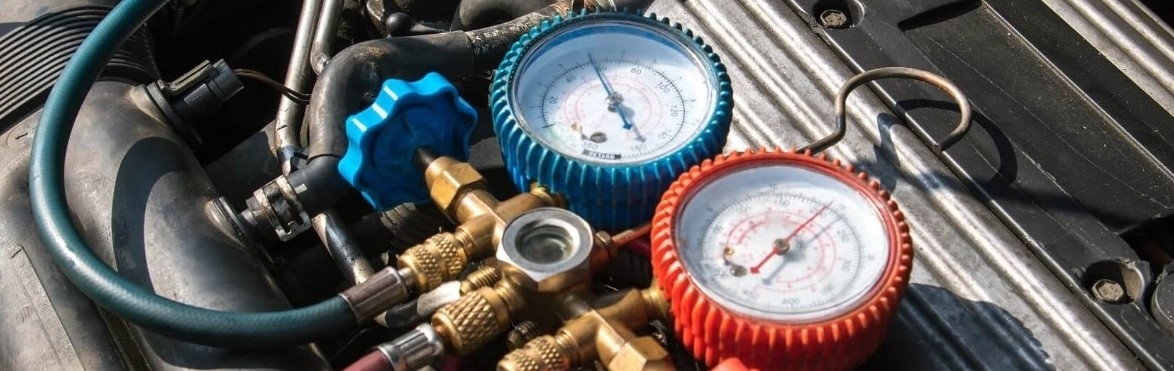
Every AC visit starts here. A technician connects gauges to read high- and low-side pressures, measures vent temperature, and confirms the compressor engages the way it should. If the charge is low, we use UV dye, an electronic leak detector, or both to track down the source. You get a clear explanation of what failed and what it will take to fix before any repair begins.
Refrigerant Evacuation and Recharge
Once a leak is repaired, the system is evacuated with a vacuum pump to pull out air and moisture. Holding that vacuum also confirms the repair is sealed. We then charge the system with the exact weight of refrigerant and oil your vehicle calls for rather than filling by feel. A final performance test verifies the vents are delivering the cooling they should.
Component Repair and Replacement
Compressors, condensers, expansion valves, hoses, and blower motors all wear out eventually. When one does, we replace it with parts built for your vehicle and address related components when the failure calls for it. A compressor that failed internally, for example, typically requires a new receiver drier and a system flush so debris doesn't ruin the replacement. We'll walk you through which parts are necessary and why.
We Find the Cause Before We Replace Anything
An air conditioning system has enough moving parts and electronic controls that guessing gets expensive fast. Our technicians start with pressure readings, vent temperatures, and a scan for stored climate control codes. From there, they test the specific component the data points to.
Here's a scenario we see often. A driver arrives after two recharges elsewhere, each of which lasted about a month. The real problem turns out to be a pinhole leak in the condenser from a stone strike, something no amount of refrigerant was ever going to solve.
- Pressure and temperature testing before any recommendation
- Leak detection with dye or electronic sniffers, not assumptions
- A written estimate and your approval before work begins
- Refrigerant charged by weight to factory specification
After the repair, we run the system again and confirm vent temperatures and pressures fall within spec. Your repair order lists what we found, what we replaced, and the readings we recorded, so you have a record for the future.
Volvo owners make up most of our AC work, but the service drive is open to all makes and models. Many performance checks and recharges are completed the same day with a scheduled appointment, while component replacements may take longer depending on parts availability.
Volvo Climate Control Service in Lawrenceville
Volvo climate systems do more than cool the cabin. The XC60 and XC90 offer multi-zone control and an available interior air quality system, and on electric models like the EX30 and EX90, the refrigerant circuit also plays a role in managing battery temperature. Our technicians look up the refrigerant type, charge weight, and oil specification for your exact vehicle by VIN before starting any work.
Timing depends on what we find. A diagnosis and recharge often fits into a single visit, and most inspections are completed the same day with a scheduled appointment. If a compressor or evaporator has to be replaced, plan on a day or more, since reaching the evaporator often means removing part of the dashboard.
- R-1234yf recovery and charging equipment on site
- Refrigerant oil matched to belt-driven or electric compressors
- Service for gas, mild hybrid, plug-in hybrid, and fully electric Volvos
Find Volvo Cars Princeton in Lawrenceville, NJ
AC Repair for Drivers Across Mercer County and Beyond
Summer traffic on Route 1 and I-295 is hard on an air conditioner, and drivers from all over the region bring their vehicles to our Lawrenceville service department when the cooling starts to slip.
- Princeton, NJ
- Ewing, NJ
- Trenton, NJ
- Hamilton, NJ
- Pennington, NJ
- West Windsor, NJ
- Hopewell, NJ
- Yardley, PA
If your vents aren't keeping up, give us a call or book online and we'll get you on the schedule.
Your AC Repair Questions, Answered
These are the air conditioning questions drivers ask us most, whether they own a Volvo or any other make and model.
Q: How do I know if my car just needs a recharge?
Q: Why does my AC smell musty when I first turn it on?
Q: Is it safe to use a DIY recharge kit from the parts store?
Q: What does an AC inspection at Volvo Cars Princeton include?
Q: Can you repair the AC on a vehicle that isn't a Volvo?
Still not sure what's going on with your climate control? Call our service desk and describe what you're noticing, and a service advisor will help you figure out the next step.
We're happy to help, even if you only have a quick question.
Book Your AC Repair in Lawrenceville
An AC problem left alone rarely stays small. A slow leak lets moisture into the system and starves the compressor of oil, and that's how a seal replacement becomes a compressor replacement.
When you bring your vehicle in, a technician tests before recommending anything. You'll see the findings and approve the estimate before any repair starts, so there are no surprises on the final bill.
Schedule online in a couple of minutes, call the service desk, or stop by and talk with a service advisor. The sooner we take a look, the sooner you'll be driving in comfort again.
Service Specials


Front or Rear Brake Pads
Replace front or rear pads,Inspect discs, calipers, lines, hoses, cylinders, and master cylinder

Oil Change
With Multi-Point Inspection
